The World as a Circle: How Monsters Are Sustained
A sociopolitical evaluation of the systemic reproduction of violence in Nigeria.
Victory Atet
Victory Atet is a Nigerian writer, editor, and creative strategist whose work explores the intersections of faith, identity, culture, and the human condition. She is the founder of Faith, Art, and Culture (FAC) — a personal and public space dedicated to reflective writing and thoughtful engagement. Rooted in poetry, essays, and editorial work, her writing is shaped by emotional depth, thematic clarity, and a commitment to nuance. With experience in creative support and project coordination, Victory collaborates with individuals and platforms to refine ideas, shape content, and drive intentional communication. She brings an analytical mindset, strong research skills, and a cross-disciplinary approach to every project, believing in the power of language to influence, clarify, and transform.
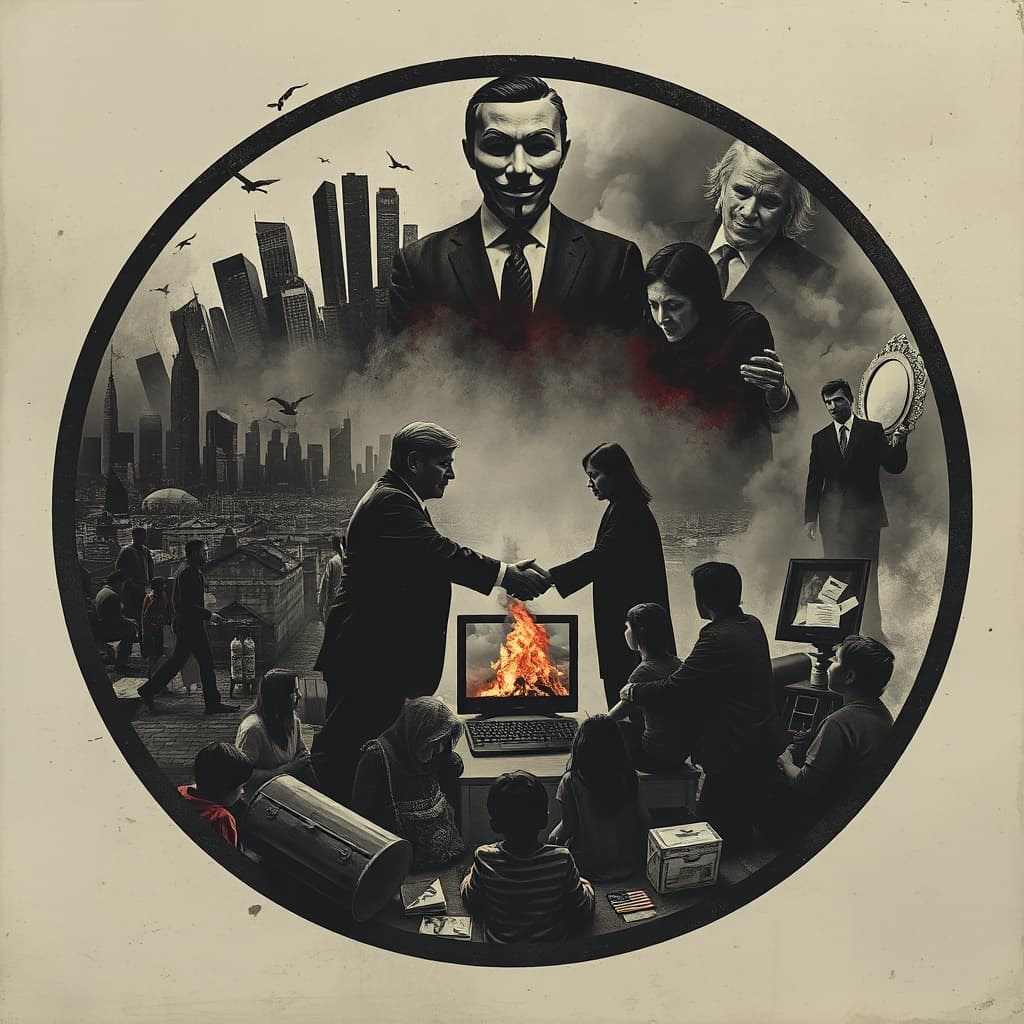
THE WORLD AS A CIRCLE: HOW MONSTERS ARE SUSTAINED
BY VICTORY ATET
Why governance failure sustains the cycle of violence, and where reformation must begin.
ABSTRACT
Crime in Nigeria is not only a product of broken homes or marginalized communities; it is sustained by systemic failures across governance, society, and religion. This article critically examines how leadership shaped by street survival tactics, families that compromise moral integrity, media distractions, and religious distortions reinforce cycles of violence. Using verified statistics, case studies, and criminology theories, it argues that policy alone cannot break these cycles unless governance, citizen responsibility, and societal structures are reformed simultaneously.
Introduction: Monsters Are Made, Not Born
In a previous essay, The World as a Circle: How Monsters Are Made, I argued that monsters are made, not born. Crime in Nigeria is not a random act of evil; it is cultivated by families that fail, societies that fracture, and religions that sometimes mislead. But if that first essay traced the roots of crime with emotional depth, this edition goes further: it asks how governance itself sustains the cycle, and why policies alone cannot break it.
The Numbers Behind the Chaos
The numbers are sobering. Data from SBM Intelligence and the Armed Conflict Location & Event Data Project (ACLED) show that Nigeria recorded over 50,000 conflict-related deaths and more than four million abductions between 2023 and 2024. Though the figures dipped slightly in 2024, fatalities in the first half of 2025 already surpass the total for the previous year.
These are not mere statistics; they are evidence of a society caught in a widening spiral of violence. More troubling still, many of the actors driving this violence are not simply resisting the state but working with its machinery.
Leadership and the Legacy of the Streets
Many of our leaders are products of the same harsh environments that breed criminality. They survived ghetto streets and learned tactics of patronage, manipulation, and violence as tools for survival. When such individuals rise to power, they do not abandon those tactics; they institutionalize them.
The gang culture of the slum becomes the godfather politics of the state. The trickster of yesterday becomes the lawmaker of today. Crime, dressed in agbada, is still crime.
The Family: A Complicit Circle
Yet it is not only government that sustains the circle. Families play their part. It is not just dysfunctional homes that produce monsters; sometimes families actively feed the cycle.
Too many parents accept crumbs from politicians in exchange for their children’s future. Votes are sold for a bag of rice, cheap naira notes, or a bottle of oil. In those moments, families legitimize the very monsters they later complain about.
The cultural decay of the home is not only neglect; it is complicity.
Faith and Its Distortions
Religion also plays a role. At its best, it inspires compassion, moral restraint, and community solidarity. At its worst, it is weaponized to inflame divisions or exploited to sanctify corruption.
Extremist groups like Boko Haram are an extreme manifestation of this distortion, but quieter distortions abound:
when prosperity preachers glorify wealth without questioning its source,
when clerics cozy up to politicians in exchange for influence,
when pulpits are rented during campaigns,
when silence is purchased through brown envelopes.
Faith then ceases to be a guardrail against injustice; it becomes a shield behind which monsters hide — a marketplace of silence where the souls of men are traded for vanity.
Accountability must begin from within, because when religion loses its integrity, it leaves us vulnerable to manipulation.
The Media and the Politics of Distraction
Citizens themselves are not innocent. Many amplify distraction, consciously or unconsciously. Influencers, comedians, and even respected voices trade truth for trending hashtags.
They manufacture noise that drowns out real outrage. And when reality TV shows like Big Brother Naija dominate national attention while poverty and insecurity deepen, citizens are lulled into complacency.
The comfort of distraction becomes a narcotic, numbing the collective will to confront power.
In Nigeria, distraction itself has become a policy, and too often it is the citizens who enforce it.
When Policy Fails: Governance and Rot
Yet, the hardest truth is this: policies written on paper will not save us if governance itself is rotten.
Nigeria has had countless reform committees, anti-corruption agencies, and poverty alleviation programs, yet most collapse under corruption or political sabotage. Policies are not magic; in the hands of bad leaders, they become weapons of oppression rather than tools of justice.
Breaking the Circle
The world is a circle, but cycles can be broken. If we accept that monsters are made, not born, then the responsibility falls on us to unmake them.
Families must be supported to nurture rather than neglect. Societies must be structured to offer opportunity rather than desperation. Religions must return to their true calling as guides, not exploiters. Justice systems must restore faith in fairness rather than deepen mistrust.
The State and Its Complicity
But here lies the tragedy: the very networks that breed insecurity are often sustained by those in power.
From street gangs recruited as political enforcers, to armed militias that operate with state protection, to clerics who trade silence for patronage, crime does not simply resist governance; it often works for governance.
This is why cycles of violence persist: the state cannot break a circle it is busy feeding.
The Circle Tightens
And it is not only the state. The circle is tightened by families who sell their votes, by clerics who sanctify corruption, by citizens who trade outrage for entertainment, and by media personalities who profit from distraction.
In this sense, the monsters are not just made in the slums or in the corridors of power; they are made in living rooms, at altars, on social media feeds, and even on television screens.
A Call for Reformation
If governance continues to rot, no policy will save us. Families will keep breaking, streets will keep burning, pulpits will keep misleading. The monsters we manufacture will not just walk among us; they will govern us.
That is the circle we must break.
And if the state refuses to begin that work, then it must begin with us. In our homes, in our communities, in the values we choose to nurture.
We must resist the engineered distractions of celebrity feuds and social media noise and return our focus to what truly matters: building lives, shaping children, strengthening communities.
If we cannot change the government immediately, we can change ourselves, and from those seeds, new circles can emerge.
“The man dies in all who keep silent in the face of tyranny.”
— Wole Soyinka
REFERENCES
SBM Intelligence. (2024). Nigeria security tracker. https://www.sbmintel.com
Armed Conflict Location & Event Data Project (ACLED). (2025). Nigeria dataset. https://acleddata.com
National Bureau of Statistics (NBS). (2024). Annual crime report. https://nigerianstat.gov.ng
Reuters. (2024, March). Mass abductions in Nigeria signal rising insecurity. https://www.reuters.com
Associated Press. (2024, March). Hundreds of children abducted in Nigeria’s Kaduna State. https://apnews.com
World Bank. (2023). Nigeria development update: Seizing the opportunity. https://www.worldbank.org
Juergensmeyer, M. (2000). Terror in the mind of God: The global rise of religious violence. University of California Press.
About Victory Atet
Victory Atet is a Nigerian writer, editor, and creative strategist whose work explores the intersections of faith, identity, culture, and the human condition. She is the founder of Faith, Art, and Culture (FAC) — a personal and public space dedicated to reflective writing and thoughtful engagement. Rooted in poetry, essays, and editorial work, her writing is shaped by emotional depth, thematic clarity, and a commitment to nuance. With experience in creative support and project coordination, Victory collaborates with individuals and platforms to refine ideas, shape content, and drive intentional communication. She brings an analytical mindset, strong research skills, and a cross-disciplinary approach to every project, believing in the power of language to influence, clarify, and transform.